Sowing The Seeds Of Freedom
A book review of Oneness vs The 1% by environmentalist in India, Vandana Shiva

Freedom is something that has come under the microscope in the wake of the events of the last two years in a very intense way. In many ways, we have been forced to view it through contrasting themes, such as censorship of free speech, lockdowns, and politicised health mandates.
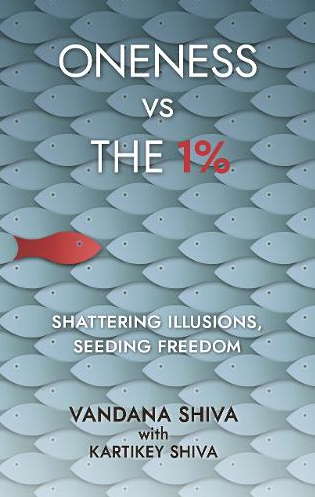
One of the constant courageous voices in this area is Vandana Shiva, an environmentalist in India and an award-winning author.
Beyond her impressive Ph.D. qualifications in quantum physics and studies in scientific disciplines, she leads by example, not rhetoric. So, I decided to read her book over the holiday period to learn from her experiences on the frontline and see what she advocates in the quest for the restoration of freedom for all.
The context
These questions are put against the landscape of existing challenges while she shares her perspective that true wealth is about well-being in every sense of the word.
The challenge
The challenge, as Vandana sees it, is the potential extinction of our planet brought about by the practices of the so-called one 1 per cent who control money and use their power in destructive ways that go against the well-being of those they purport to serve.
She concludes that not only have they manipulated the market to drive a wedge between the people and well-being, but we are also being driven to a precipice, which requires a radical shift so that it does not become inevitable.
Here are some figures she lays out to back what she says. I have put them in tabular form below. These figures show how many billionaires have controlled as much wealth compared to over the last 12 years approximately.
| Year | No of Billionaires |
| 2010 | 388 |
| 2011 | 177 |
| 2012 | 159 |
| 2013 | 92 |
| 2014 | 80 |
| 2016 | 62 |
| 2017 | 8 |
This is certainly not a picture of the few wanting to empower the many. I wonder what that figure is now in 2023? Who is the driving force looking to reduce this further?
The contract
In the table below, I have captured a few of the contrasting themes between oneness and the practice of the 1% from my reading:
| Practice of Oneness | Practice of the 1% |
| Service | Ego |
| Constructive | Destructive |
| Unity | Separation |
| Cooperation | Colonisation |
| Earth Citizenship | New World Order |
| Love | Fear |
| Agroecology | Patented Political Science |
| Ecocene | Anthropocene |
Separation v Oneness
As with any action, t here is a physical, mental, emotional and spiritual layer present. On the theme of separation, which is a mirror opposite of oneness Vandana gives examples in which separation shows up in the practice of the 1 per cent.
1) A mechanical and linear in approach to Nature, which ‘allows the 1 per cent to extract wealth from Nature and society, defining their “extra activism” as scientific, economic and human progress.’
2) The use of key tools used such as colonisation, patents and extraction of data through artificial intelligence to create separation of humans from nature, separation of humans from each other, and separation of the self from their true nature.
On the other hand, oneness recognises the interconnected of all things. It seeks to reconcile those separations in partnership and true interdependence through ‘self-organisation, intelligence, creativity, freedom, potential, autopoietic evolution and non-separability in nature and society.’
This is a constructive use of a colony as opposed to the destructive opposite of the 1 per cent, who wish to control everything for their unjust enrichment and for our enslavement.
Making a difference
In the face of major challenges, often, the question arises as to what difference an individual can make. Vandana Shiva makes constant reference to Gandhi as someone who influenced her thinking.
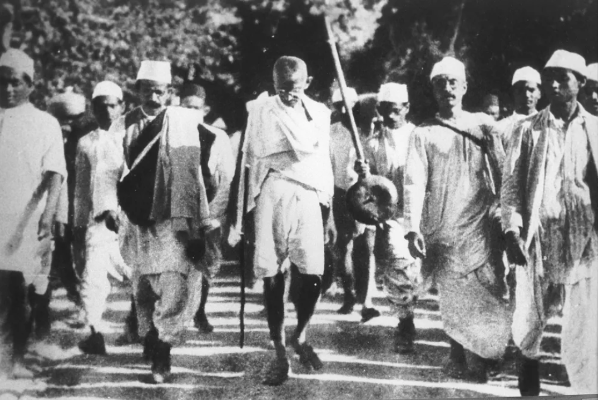
Gandhi is often remembered for his quote: 'be the change you wish to see in the world.'
If you accept this stance, then change starts from within, and it becomes a question of examining and adjusting perception to frame behavior and actions moving forward.
You might examine where your mind has underlined separation and look to reconcile your view that embraces oneness as a principle.
Where have you become separated from nature, from your fellow man and woman, and from yourself? Where can you create reconciliation in those areas?
An open heart and m ind
It requires an open heart and mind, and a good example of this is provided in the book. Sir Albert Howard, an English botanist, traveled to India in 1905 with the intention of demonstrating western systems of farming.
Embracing oneness
'Both taught me about interconnectedness and non-separability. The women of Chipko taught me about the relationships between forests, soil and water, and women’s sustenance economies; quantum theory taught me the four principles that have guided my thinking and my life’s work - everything is interconnected, everything is potential, everything is indeterminate, there is no excluded middle, we are interbeings.'
These brave Chipko women went head to head with the government, putting their lives on the line to preserve the integrity of the ecology of the forest and won their battle in 1981.
This just goes to show what can happen when you combine an openness of heart with a solid education and then draw inspiration from those working in the trenches, capable of imparting wisdom beyond academia.
This can fan into flame the belief, desire, and willingness to step into what the heart knows to be true by getting involved in a grassroots movement or by starting your own initiative with like-minded individuals.
The importance of research
Beyond the qualities of an open heart, education, and inspiration lies the importance of research to document and anchor good practice.
For example, the practice of agroecology is not just about the protection of seeds for farming. The research which demonstrates the impact of the processes of biodiversity is equally important, especially given that the globalists use political science to manipulate data to fit their agenda and narrative.
The case of Norman Borlaug’s dwarf wheat, dubbed as a ‘miracle’ in the Green Revolution, was countered by such research and is a case in kind which demonstrates this essential practice.
Call to action
Vandana's book is not only inspirational read, i t is a call to action based on three enduring principles from India’s history by way of a framework to sow seeds of freedom.
- Satyagraha - bringing the force of truth to be through real democracy, which involves non-cooperation and resistance to destructive practices.
- Swaraj - self-responsibility in the way individuals govern their lives in the name of freedom.
- Swadeshi - creating self-sustaining local communities according to the needs of that group. The Greek word for such activity is autopoiesis, meaning self and creation, the ability to systematically self-generate.
The examples of how the locals in India were able to protect the heritage of the land and its ecology, based on the above three principles, were truly inspirational.
It has not been without loss and challenges, but when you read, for example, how five million women in India were able to make such a difference in protecting local food safety standards, it is a powerful reminder that a small group of committed people can make positive waves for humanity.
We are the change
These examples support Vandana's point that we cannot merely observe and protest. It is incumbent upon each of us to apply the principle of Satyagraha to our thinking and embody the solution according to our values, abilities and talents in the vein of ‘being the change we wish to see in the world.’
By participating in the solution, we sow seeds of democracy because the nature of democracy is practical. We are the change we are seeking, and by calling out this change from within, we can both sow the seeds and reap the harvest of true democracy and freedom for the benefit of all.
Anita Narayan
Member, Community Assembly of the British Isles
This book review was first published by Markethive on January 18, 2023
Further Reading
Irreplaceable - Julian Hoffman
Humankind: A Hopeful History - Rutger Bregman
The Wisdom of Wolves - Elli H Radinger
A Community Perspective - Sue Cartwright
A Community Hub - Sue Cartwright
A Community Assembly - Sue Cartwright
The Winning Ways of Togetherness - John Gilbert
If you enjoyed this post, please share or forward to a friend - thank you!

Guided by Natural Law
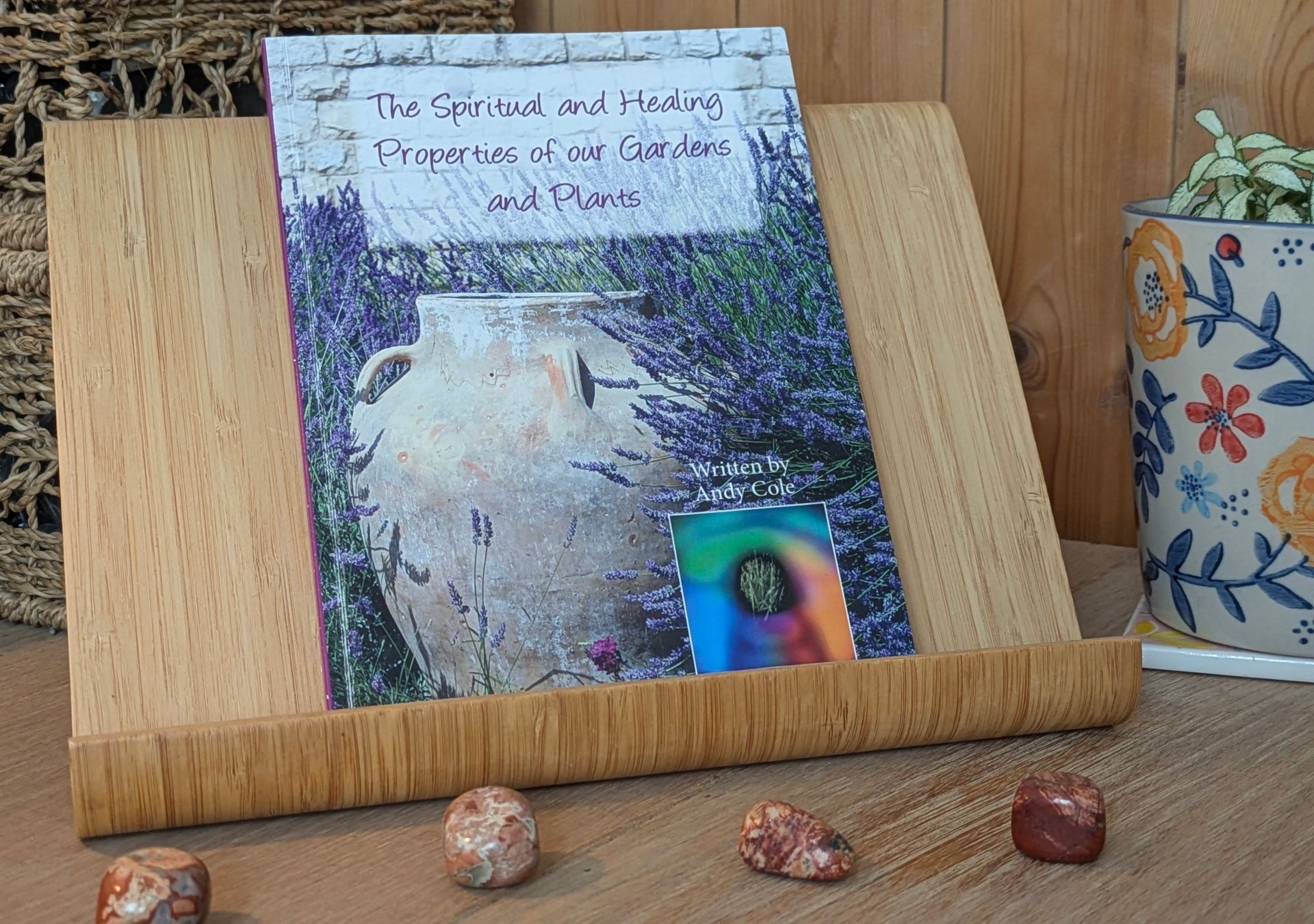
Spiritual and Healing Properties of our Gardens and Plants by Andy Cole LCHI

Stolen Isles by Stuart Hill

Joy in Crisis by Swarupa

Seven Sacred Grandfather Teachings

History of the Stannary System (Kernow Assembly and Korts Ownder)

Our Aurora Network

Our Sovereign Future

Who's Jurisdiction - An Interview with Wiremu Williamson